
Showing posts with label Hercules. Show all posts

Friday, December 30, 2016

Top 5 Reads of 2016!

I do a lot of reading and rereading -- this year I'm at 97 books read, and a very solid portion of those are rereads from years past (I'm in the middle of a huge Animorphs reread sooo.) But for THIS post, I'm going to just focus on the books that were new to me this year. If I have time, I'll put together another with my Top Five ReReads but -- that will wait for another day, or maybe even the new year! I'm also going to be assembling a top Hist Fic reads list for that other Amalia, so I'm excluding those from this particular list as well.

Top five NEW reads of 2016


Gentleman Jole and the Red Queen (Vorkosigan Saga, #16)
1) Gentlemen Jole and the Red Queen by Lois McMaster Bujold.

Cordelia is one of my most favorite literary characters -- and as far as sci fi characters go, she's right up there with Princess Leia, so of course I was beyond stoked when I heard that at long last, Cordelia was going to be center stage again in this Vorkosigan Saga installment. And my friends, I was not disappointed. Cordelia is presented in all her Betan glory and I absolutely adored every page. (I think I'll always love Cordelia more than Miles, though, so if you're in it for Miles and not Cordelia, you might not enjoy this one quite so much. Also if you have strong feelings about the nature of Aral and Cordelia's relationship across all those years... well. Prepare yourself. You might be in for a shock.)
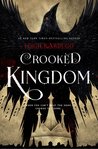

Crooked Kingdom (Six of Crows, #2) 2) Crooked Kingdom by Leigh Bardugo

Look, I'll be honest with you -- I think this duology is better than the Grisha Trilogy. By like, a lot. I mean I enjoyed the Grisha Trilogy but, I LOVED these two books, and that was even going into book one as a skeptic. I also think this book could just as easily have been adult fantasy rather than YA. For sure it's upper YA/Crossover YA/New Adult, at the least. And this second book? It was everything I wanted it to be, with one small storytelling-decision exception. It was a super fitting end to what was a super thrilling adventure and even if, like me, Fantasy Heist Novel isn't something you'd normally be into, you should still give this a shot!


Keeping Time (Servants of Fate, #3) 3) Keeping Time by Wendy Sparrow

I am a HUGE fan of Stealing Time, the first in this series, so when the opportunity to advance read and blurb came to me for the sequels, I jumped on it. This third installment with Ruin and Phoebe was my favorite of the two new novellas released this year, and the way Sparrow captures that awkward and uncomfortable (but also TOO comfortable) space of intimacy between best friends who are afraid to take the next step and make it into something more is perfection. Even better -- this series takes place basically for the full length of the winter holiday season, ending on New Year's Eve, so you can still make it your holiday romance of the season!! (I believe there's even a box set, which I would totally recommend -- personally, I picked all three of them up in paperback to have and hold forever.)
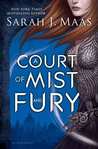

A Court of Mist and Fury (A Court of Thorns and Roses, #2) 4) A Court of Mist and Fury by Sarah J. Maas

I thought I knew what this book was going to be. I was anticipating a certain amount of annoyance with that direction. And then I started reading, and the deeper I got, the more wrong I was about everything I'd thought. This was one of those could-not-put-it-down reads, and I think it's even better than the first book in the series. But I'm not sure it could be as good as it is WITHOUT the foundation of that first book, either, even though for some people I can see how the first book might be unsatisfying. If you read book one and gave it the side-eye -- I think book two will be a different experience for you, for sure. First couple of chapters excluded. Trust me -- just keep reading.


New Pompeii5) New Pompeii by Daniel Godfrey

First: choosing my 5th book for this list was tough, but after scrolling up and down and up and down my list of books read, I think this one has to be it. I picked this up on a whim at the bookstore and I don't know what I had really high hopes for it at the time -- I always worry about books that present ancient peoples alongside modern characters. But. Godfrey definitely did not shy away from giving the Ancient Romans their due. They scheme and plot and manipulate as skillfully as one could hope, and although I would've liked a little more grounding of the world we begin in to make the alternate timeline glimpses more meaningful, that's not going to stop me from getting my hands on book two, and it didn't stop me from enjoying the read!


Honorable Mentions:

Hunter and Elite by Mercedes Lackey
Age of Heroes by James Lovegrove (Almost entirely because Theseus!)
Hercules: Still Going Strong by Dan Abnett (graphic novel -- but it is SO GOOD.)
and Sabriel by Garth Nix

If you want to see the complete list of all the books I've read this year -- klikk klikk!

Forged by Fate (Fate of the Gods, #1) Tempting Fate (Fate of the Gods, #1.5) Fate Forgotten (Fate of the Gods, #2) Taming Fate (Fate of the Gods, #2.5) Beyond Fate (Fate of the Gods, #3) Honor Among Orcs (Orc Saga, #1) Blood of the Queen (Orc Saga, #2) Postcards from Asgard
Amazon | Barnes&Noble 

Helen of Sparta By Helen's Hand Tamer of Horses Daughter of a Thousand Years
Amazon | Barnes&Noble

Tuesday, March 31, 2015

Isocrates on Helen

Tomorrow, HELEN OF SPARTA is available everywhere (!!!!) and so I thought it only fitting to talk a little bit about Helen herself -- Isocrates makes an interesting argument regarding Helen's beauty which I think is particularly worth sharing:
Helen of Troy
Helen of Troy by Evelyn de Morgan
via wikimedia commons
16. [...]While most of the demigods owed their existence to Zeus, she was the only woman of whom he condescended to be called the father. While he took most interest in the son of Alcmene and the children of Leda, he so far showed preference for Helen over Heracles, that, having granted such strength to the latter that he was enabled to overcome all by force, he allotted to Helen the gift of beauty, which is destined to bring even strength into subjection to it. 17. Knowing, further, that distinction and renown arise, not from peace, but from wars and combats, and wishing not only to exalt their bodies to heaven, but to bestow upon them an everlasting remembrance, he ordained a life of toil and danger for the one, while he granted to the other beauty that was universally admired and became the object of universal contention.

Basically, he says, Zeus gave Helen the ABSOLUTE most powerful gift, raising her up over Heracles, because even strength is helpless in the face of such beauty as Helen possessed.  And not only that! But as further proof of his favor, he made sure Helen would NEVER be forgotten, because, basically, she would be fought over forever by everyone.

But the thing Isocrates fails to take into consideration is this: Heracles can choose where to leverage his strength. He can decide to ransack a city, or kill a lion with nothing but a club and his bare hands. He has CONTROL over his strengths, for the most part -- unless he's being directly manipulated by the gods, or else has flown into a rage (possibly because of direct manipulation by the gods.)

Helen, on the other hand, is given this incredible gift, this incredible beauty, but left with no control over it. None. And to add insult to injury, she is BLAMED and held solely accountable for the results. She is cursed for causing the Trojan War, cursed for betraying and abandoning her husband and daughter. All the blood of all the men who follow her to Troy, and all the men who fight for her right to remain there is on her hands, all that death on her head, and her head alone.

Yes, Helen was remembered. But not as a hero. Unlike Odysseus, and Heracles, and Theseus, Helen is not famous for her noble deeds.

She is infamous for her lack of virtue.

If that's how Zeus treats his favorites, I'd rather be overlooked altogether.


Available April 1, 2015 
Amazon | B&N | Goodreads
Long before she ran away with Paris to Troy, Helen of Sparta was haunted by nightmares of a burning city under siege. These dreams foretold impending war—a war that only Helen has the power to avert. To do so, she must defy her family and betray her betrothed by fleeing the palace in the dead of night. In need of protection, she finds shelter and comfort in the arms of Theseus, son of Poseidon. With Theseus at her side, she believes she can escape her destiny. But at every turn, new dangers—violence, betrayal, extortion, threat of war—thwart Helen’s plans and bar her path. Still, she refuses to bend to the will of the gods.

A new take on an ancient myth, Helen of Sparta is the story of one woman determined to decide her own fate.


Forged by Fate (Fate of the Gods, #1) Tempting Fate (Fate of the Gods, #1.5) Fate Forgotten (Fate of the Gods, #2) Taming Fate (Fate of the Gods, #2.5) Beyond Fate (Fate of the Gods, #3)
Honor Among Orcs (Orc Saga, #1) * Postcards from Asgard * Helen of Sparta
Buy Now:
Amazon | Barnes&Noble

Tuesday, March 24, 2015

Helen, Theseus, and the Mythic Seeds of Discord

The conflicts between Sparta and Athens run deep and long, and as we all know from reading Homer and Herodotus, it was the habit of the ancient world to take common ideas and issues along with common ways-of-doing-things and reflect those back onto the struggles of their heroes in myth. Perhaps then, it would be stranger if Sparta and Athens did not have anything to fight over during the age of heroes.

What if, in part, this was the purpose of Theseus' abduction of Helen in the myths?

Theseus Helene Staatliche Antikensammlungen 2309 n2
Helen and Theseus
via wikimedia commons
The House of Atreus was known to be cursed, after all, and I have no trouble believing that if Theseus made an honest offer of marriage to Tyndareus and it was refused in favor (either in fact, or by assumption) of Menelaus and Mycenae, Athens would find that snub very offensive indeed. How dare Sparta insult their hero by choosing a cursed man as the husband of Helen over Theseus?

But that wouldn't be all. You see, the conflict goes both ways. Say that, in retaliation of this snub, or even just for funsies, Theseus chooses to take what he wants after all. He's deserving. Certainly he is, by pedigree, a better match for Helen than Menelaus could ever be. Theseus is a son of Poseidon, a (for the moment) successful and powerful king, and a hero equal only to Heracles. Add into the equation the dodgy influence of piratical Pirithous, and it's easy to see how Theseus might be persuaded to pursue Helen without her father's consent. Even to go so far as to kidnap her (because it isn't like he hasn't whisked women off before--and that kind of behavior was well established by Heracles, and even more established by the behavior of the gods who did that kind of thing with great regularity. Helen herself is a product of this same entitlement, after all!).

Sparta, taking great offense by the kidnap of their princess and HEIR, sends off their best to get her back. Helen's brothers, Castor and Pollux--the Dioscuri--find her if not in Athens, at the very least, under the power of Theseus, possibly even violated by him! I can't imagine Sparta not being highly insulted and infuriated by such a thing, and these Greeks-- they know how to hold a grudge.

Take into account the fact that in the process of Helen's retrieval, Castor and Pollux upset the inheritance of Athens by putting their own man on the throne, and you've got an even greater recipe for long-standing conflict. Sparta has just added insult to injury by meddling in Athens' politics. You don't even need Athens to have been insulted by the choosing of Menelaus over Theseus first (though I will say that I find that to be pretty compelling).

In this one story, a relative latecomer to the drama and tragedy of Helen of Troy, the seeds of enmity between Sparta and Athens have been sewn. These Myths, after all, are the ancient Greek way of explaining the whys and wherefores.

So, why are Sparta and Athens constantly finding reasons to dispute with one another? Well you see, once long ago, there was a girl named Helen....


Available April 1, 2015 
Amazon | B&N | Goodreads
Long before she ran away with Paris to Troy, Helen of Sparta was haunted by nightmares of a burning city under siege. These dreams foretold impending war—a war that only Helen has the power to avert. To do so, she must defy her family and betray her betrothed by fleeing the palace in the dead of night. In need of protection, she finds shelter and comfort in the arms of Theseus, son of Poseidon. With Theseus at her side, she believes she can escape her destiny. But at every turn, new dangers—violence, betrayal, extortion, threat of war—thwart Helen’s plans and bar her path. Still, she refuses to bend to the will of the gods.

A new take on an ancient myth, Helen of Sparta is the story of one woman determined to decide her own fate.


Forged by Fate (Fate of the Gods, #1) Tempting Fate (Fate of the Gods, #1.5) Fate Forgotten (Fate of the Gods, #2) Taming Fate (Fate of the Gods, #2.5) Beyond Fate (Fate of the Gods, #3)
Honor Among Orcs (Orc Saga, #1) * Postcards from Asgard * Helen of Sparta
Buy Now:
Amazon | Barnes&Noble

Tuesday, March 17, 2015

Kinship and Greek Heroes

One of the things I find really fascinating in Classical Mythology is the familial bonds between heroes and how little emphasis is placed upon them. It's so strange to think of these other heroes as siblings and cousins to one another. So often we don't have any understanding of those bonds in the stories that surround them. Pirithous and Theseus are an exception, in some respects, since we know from more than one source that they were like brothers -- but their relationship doesn't have anything to do with their shared lineage or the idea that they're cousins. They bond over their perceptions of one another as honorable and equals in strength and cunning and bravery.

We never hear about Heracles calling up his half-brothers or sisters, or really forming relationships with his blood-relatives on his divine side. Sure, he might have buddied up with Theseus to hit on the Amazons, and there's that whole Jason and the Argonauts thing, about which we will not speak, but even when Euripides showcases the friendship between Theseus and Heracles, there isn't any mention of their familial bond. They were friends and heroes in arms, but not explicitly spoken of as cousins, either.

Of course some of the heroes are from different generations, and not at all contemporaries -- like Pirithous and Perseus, for example, or Heracles and Perseus* -- so in that case, it's a lot less strange that there's no mention of any relationship they might have shared. But Pirithous and Heracles were contemporaries AND brothers, and I'm not sure I know a single myth in which they cross paths at all. So as I read, and write, I wonder: what might Pirithous have thought of his famous brothers, living and dead? Did he consider them kin at all? And if not, why not? And did Theseus consider Pirithous to be his cousin as well as his best friend?

These are things I love exploring in fiction -- and the relationship between Theseus and Pirithous is definitely a part of HELEN OF SPARTA that I wouldn't want to do without!

I grabbed some academic insight on twitter, if you're as interested in these thoughts as I am!


*Perseus is actually an ancestor of Heracles as well as his brother. Alcmene, Heracles' mother was Perseus' granddaughter. So in this case, one would think there would be even more of an acknowledgment of that family connection. But. Not so much. Then again maybe being the great-grandfather and brother of Perseus crossed some incestual line of weirdness for the Greeks, so they just kind of tried to ignore it.


Available April 1, 2015 
Amazon | B&N | Goodreads
Long before she ran away with Paris to Troy, Helen of Sparta was haunted by nightmares of a burning city under siege. These dreams foretold impending war—a war that only Helen has the power to avert. To do so, she must defy her family and betray her betrothed by fleeing the palace in the dead of night. In need of protection, she finds shelter and comfort in the arms of Theseus, son of Poseidon. With Theseus at her side, she believes she can escape her destiny. But at every turn, new dangers—violence, betrayal, extortion, threat of war—thwart Helen’s plans and bar her path. Still, she refuses to bend to the will of the gods.

A new take on an ancient myth, Helen of Sparta is the story of one woman determined to decide her own fate.


Forged by Fate (Fate of the Gods, #1) Tempting Fate (Fate of the Gods, #1.5) Fate Forgotten (Fate of the Gods, #2) Taming Fate (Fate of the Gods, #2.5) Beyond Fate (Fate of the Gods, #3)
Honor Among Orcs (Orc Saga, #1) * Postcards from Asgard * Helen of Sparta
Buy Now:
Amazon | Barnes&Noble

Tuesday, February 24, 2015

Affairs of the Gods: How Could These Victims Have Been So Clueless?

There are two ways to approach questions like this:
1) The Events of the Myths Really Happened
2) The Events of the Myths Are Stories/Propaganda/Explanations/Metaphors/etc

If you've been hanging around me or my blog(s) for any length of time, you probably know that the fiction writer in me favors the first approach -- and imagining these characters and trying to discover their motivations and understand the choices they might have made is where a lot of the fun of writing about them comes from. So with this question, it's only natural that I'd start with the more literal perspective. (It's more just more interesting guys!)

The Short Answer:
I suspect that they were less clueless and more just uninformed.

The Long Answer:
The Flight of Europa by Paul Manship
photo by me!

Here's the thing. Today, if some king's daughter were kidnapped by a really pretty bull, the whole world would know about it. Or at least the part of the world that pays attention to that kind of information, anyway. (She'd also be found and returned home, probably, rather than dumped in another country to marry into their royal bloodline, but I digress.) Back in Europa's time? It was probably more of a quiet, regional event. Why should she expect the bull of being a god in disguise, intent on stealing her away, if she'd never heard of Zeus pulling that kind of stunt?* Maybe, possibly, some kind of rumor of Zeus coming down as a shower of gold to... make sweet love? to Danae** might have been making the rounds somewhere in the Peloponnese, but it is REALLY unlikely the story would have made it as far as Phoenicia, where Europa was hanging out with her maiden friends, enjoying the attentions of a particularly tame bull.

Now maybe these two examples are cheating, because both of these women were earlier victims of Zeus' proclivities, but the fact remains that there are no guarantees that any one of the  importuned women who followed would have had extensive knowledge of the god's other exploits. There's a couple of exceptions of course. Alcmene, for example, was the granddaughter of Perseus, so the story of Great-Grandmother Danae could easily have been part of family lore before her run in with Zeus and the subsequent birth of Heracles. But since Zeus took the form of Alcmene's own husband, Amphitryon, there is really no possibly way that forewarning might have helped her avoid his attentions.

It's easy for us to see all these stories laid out neatly and chronologically, with repeated themes of Zeus putting one over on some poor beautiful girl, and wonder why these people couldn't figure it out. But the truth is, those stories weren't assembled into the written word at all until centuries after the fact. If you consider that the Trojan War was basically the end of the Age of Heroes, and all the philandering that entailed, then the majority of these events would have taken place during the Greek Bronze Age -- the Mycenaean and Minoan periods. At the end of which, civilization kind of collapsed and the Greeks not-so-promptly forgot how to write for several hundred years.

Oral history is a lot more limited, regionally, though Homer provides us with evidence that even oral stories could be spread -- if the bard thought the audience would be interested. But if he didn't?

Well. It sure makes me appreciate the bounty of the internet for self-education, that's for sure.


*Europa was mother to Minos, which means she was at least one, maybe two generations before Theseus and Heracles.

**Danae was the mother of Perseus, who was himself the very FIRST of the Greek Heroes. He did not actually ride Pegasus, and the Kraken is a sea monster out of Scandinavia. Just for the record.


Available April 1, 2015 
Amazon | B&N | Goodreads
Long before she ran away with Paris to Troy, Helen of Sparta was haunted by nightmares of a burning city under siege. These dreams foretold impending war—a war that only Helen has the power to avert. To do so, she must defy her family and betray her betrothed by fleeing the palace in the dead of night. In need of protection, she finds shelter and comfort in the arms of Theseus, son of Poseidon. With Theseus at her side, she believes she can escape her destiny. But at every turn, new dangers—violence, betrayal, extortion, threat of war—thwart Helen’s plans and bar her path. Still, she refuses to bend to the will of the gods.

A new take on an ancient myth, Helen of Sparta is the story of one woman determined to decide her own fate.


Forged by Fate (Fate of the Gods, #1) Tempting Fate (Fate of the Gods, #1.5) Fate Forgotten (Fate of the Gods, #2) Taming Fate (Fate of the Gods, #2.5) Beyond Fate (Fate of the Gods, #3)
Honor Among Orcs (Orc Saga, #1) * Postcards from Asgard * Helen of Sparta
Buy Now:
Amazon | Barnes&Noble